Cosmic


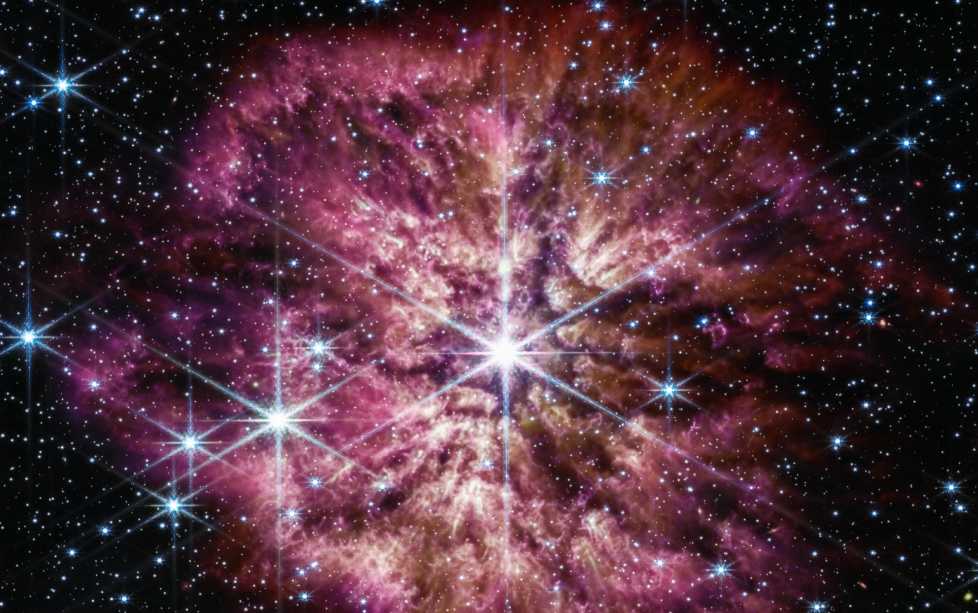
JWST Captures Stunning Portrait of Dying Wolf-Rayet Star WR-124 in Cosmic Farewell
A breathtaking image from the James Webb Space Telescope (JWST) reveals Wolf-Rayet star WR-124, a 30-solar-mass behemoth 15,000 light-years away in Sagittarius. First observed in June 2022, the star has ejected 10 solar masses of gas and dust, forming a spectacular nebula—an unprecedented view of a star in its final, violent stages before a potential supernova.

Stephan’s Quintet: A Cosmic Dance of Galaxies Discovered in Pegasus
Stephan’s Quintet, a fascinating group of galaxies in the constellation Pegasus, was discovered by French astronomer Édouard Stephan in 1877. This galactic ensemble has since captivated astronomers with its dramatic interactions and serves as a prime laboratory for studying galaxy evolution.

Mars' Magnetic Remnants: The Lost Shield and Its Cosmic Consequences
Mars, once a potentially habitable world, now bears only the faint traces of a once-mighty magnetic field. Unlike Earth’s global magnetic shield, Mars’ ancient dynamo shut down billions of years ago, leaving behind patchy magnetic anomalies—silent witnesses to a pivotal event that reshaped the planet’s environment. How did Mars lose its magnetic field, and what does this mean for its habitability?

TRAPPIST-1e: High-Hope Exoplanet with 0.95 ESI Faces Tidal Lock Challenge
TRAPPIST-1e, boasting a 0.95 Earth Similarity Index (ESI), leads seven rocky planets in its system as the most likely to harbor life. But its closeness to the host star has tidally locked all planets, trapping one side in perpetual light and the other in darkness—leaving only a narrow twilight zone as a potential life haven.

Ice Giants and Mini-Neptunes: The Solar System’s Elusive Planetary Enigmas
Ice giants like Uranus and Neptune, and smaller "mini-Neptunes" (larger than Earth but smaller than Neptune), represent a puzzling gap in our solar system knowledge. These worlds, with hydrogen-helium atmospheres and rocky cores, remain the least explored planetary class—despite comprising a dominant type in exoplanetary systems.

Stellar Nurseries and Cosmic Collisions: Webb and Rubin Telescopes Unveil Galactic Secrets
Astronomers have unveiled two groundbreaking images capturing the dynamic interplay of star formation and galaxy evolution. The first, a composite of the Trifid and Lagoon Nebulae, combines 678 individual exposures taken over just seven hours by the Vera C. Rubin Observatory’s 3.2-billion-pixel camera. This unprecedented resolution reveals intricate gas and dust structures in these stellar nurseries, where new stars are born from collapsing molecular clouds.

Stevenson 2-18: The Cosmic 'Puffball' Star That Could Swallow Saturn
Meet Stevenson 2-18, a star so colossal it’s earned the title of the universe’s "flabby giant." With a radius of 1.5 billion kilometers, this red supergiant would engulf Saturn if placed at the Sun’s position. Despite its eye-popping size, it packs only 15–20 times the Sun’s mass—making it a celestial "balloon" on the brink of a spectacular supernova explosion.

Segue 2: The 'Pitiful' Dwarf Galaxy Trapped in the Milky Way's Gravitational Grip
Segue 2, a diminutive galaxy spanning just 220 light-years and hosting fewer than 1,000 stars, stands in stark contrast to giants like IC 1101—making it appear as cosmic "stardust." Scientists suspect this tiny entity is an early-universe "relic," gravitationally bound to the Milky Way, forever stunted in its growth.

The Magnificent Barred Spiral M109: A Cosmic Masterpiece in Ursa Major
Nestled in the northern constellation Ursa Major beneath the Big Dipper’s handle, the barred spiral galaxy M109 (Messier 109) stands as the 109th entry in Charles Messier’s iconic catalog. Its prominent central bar gives it the shape of the Greek letter "θ," a mathematical symbol fitting for a galaxy that bends cosmic scales: though spanning just 7 arcminutes (0.12 degrees) in the night sky, this celestial wonder stretches 120,000 light-years across at its estimated 60-million-light-year distance.

The Seagull Nebula: A Cosmic Avian Marvel in Canis Major
Shaped like a soaring bird from glowing gas and dark dust, the Seagull Nebula captivates stargazers with its celestial avian form. Spanning 3.5 degrees across the galactic plane in Canis Major, toward the star Sirius, this interstellar wonder combines emission nebulae, reflection nebulae, and dramatic shock structures—offering a window into violent stellar processes.

Vera C. Rubin Observatory Reveals Breathtaking Sagittarius Starfield Near Galactic Core
The Vera C. Rubin Observatory, a joint project of the NSF and DOE, has released one of its first images: a 4-degree-wide starfield spanning Sagittarius, showcasing the crowded stellar backdrop toward the Milky Way’s core. The snapshot captures iconic nebulae and clusters, including Messier 8 (the Lagoon Nebula) and Messier 20 (the Trifid Nebula), in stunning detail.

Does a Spiral Galaxy Hide a Mini-Spiral in Its Core? M61 Reveals Cosmic Nesting Dolls
The spiral galaxy Messier 61 (M61) defies expectations with a surprising feature: a swirling "mini-spiral" structure at its core. This composite image—combining data from the Hubble Space Telescope, ESO’s Very Large Telescope, and ground-based observatories—shows M61’s grand spiral arms and a vibrant core that resembles a standalone spiral galaxy. Located 55 million light-years away in the Virgo Cluster, this barred spiral (NGC 4303) exemplifies how galactic cores can host intricate substructures mirroring their larger forms.
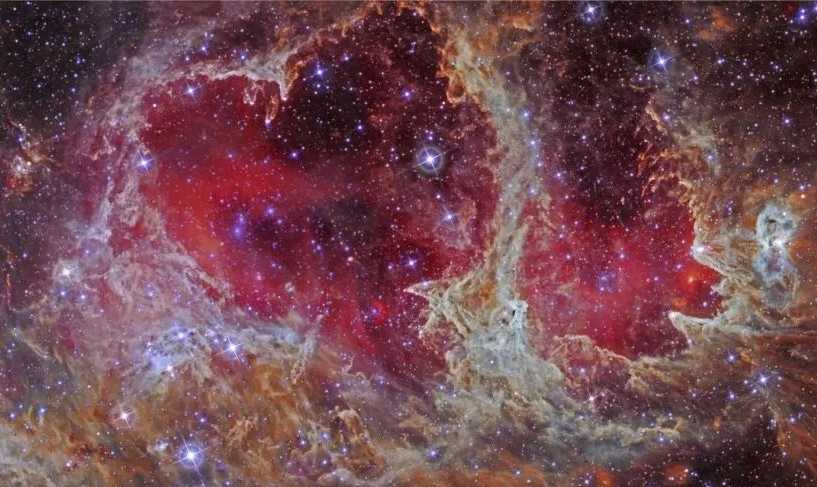
The Cosmic Crucible: How Stars Are Born—Insights from W5's Infrared Portrait
The Core Processes of Star Formation: Gravity and Gas in Cosmic Ballet Stars emerge from dense molecular clouds (composed mainly of hydrogen molecules and dust), with their formation unfolding in critical stages:
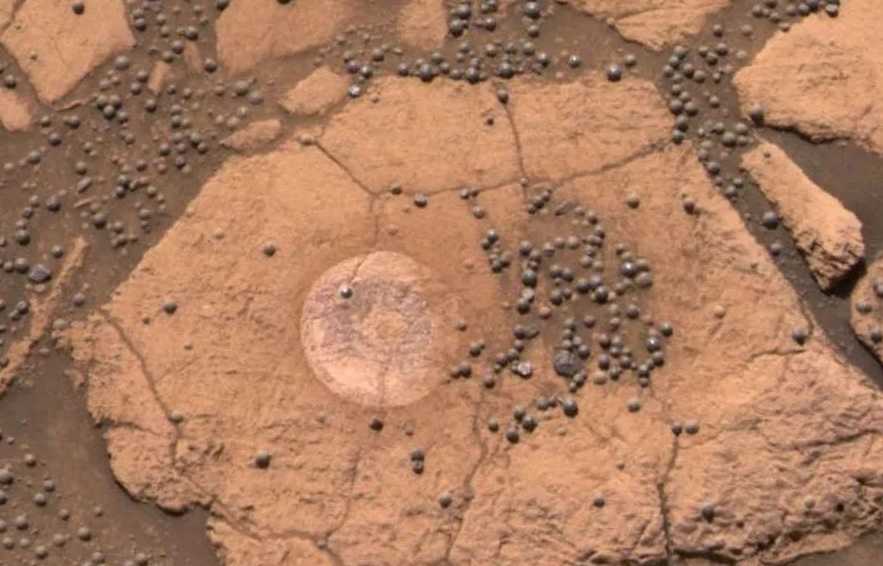
Mars' Mysterious 'Blueberries': How Did These Iron-Rich Spheres Form?
In 2004, NASA's Opportunity rover discovered thousands of gray, iron-rich spheres on Mars, nicknamed "blueberries." These 4-mm-wide balls littered rocks near the landing site, puzzling scientists until the rover found a depression—dubbed the "Berry Bowl"—packed with the spheres, captured on the 48th Martian day of the mission.

UGC 2885: The Colossal Galaxy 800,000 Light-Years Across
In this Hubble Space Telescope image, foreground stars with bright stellar spikes in Perseus lie within the Milky Way, while the focus reveals UGC 2885—a giant spiral galaxy 232 million light-years from Earth. Stretching 800,000 light-years (eight times the Milky Way’s diameter), it hosts nearly 100 trillion stars—10 times our galaxy’s population—making it a pivotal case study for how galaxies achieve colossal sizes.
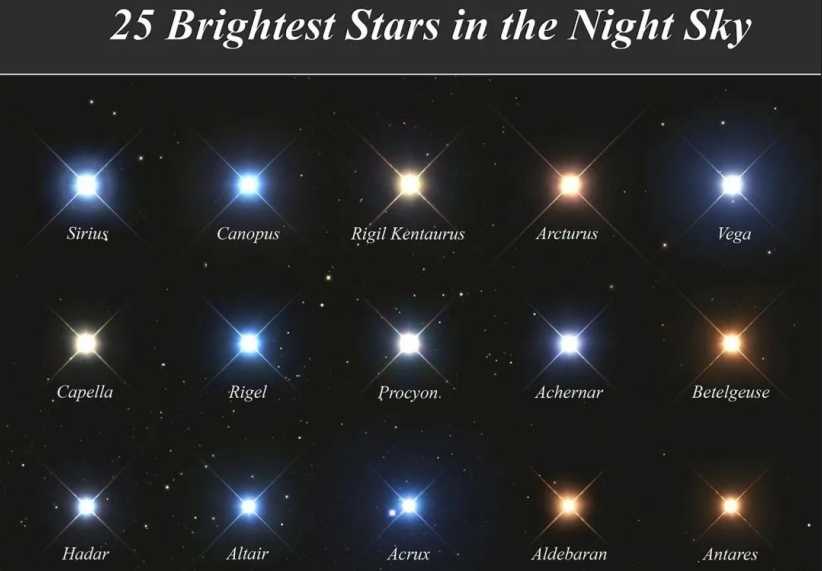
The Brightest Stars in the Night Sky: IAU-Named Icons and Their Ancient Tales
For millennia, humanity has named the brightest stars, weaving their light into myths and calendars. Today, the International Astronomical Union (IAU) standardizes these names to unite global science, but each moniker still holds cultural treasures. Here’s a journey through the 25 brightest stars—by apparent magnitude—with their IAU-designated names and the stories behind them.

Savudrija Lighthouse and Celestial Star Trails: A Timeless Navigation Portrait
The historic Savudrija Lighthouse shines along the northern coast of Istria Peninsula in this masterful night-sky composition. Built in the early 19th century, the beacon has guided Adriatic sailors for centuries, its beam contrasting with the ancient navigational icon above: Polaris, the North Star. In the image, Alpha Ursae Minoris traces the shortest arc around the North Celestial Pole—the cosmic pivot of Earth’s axis—at the center of concentric star trails.
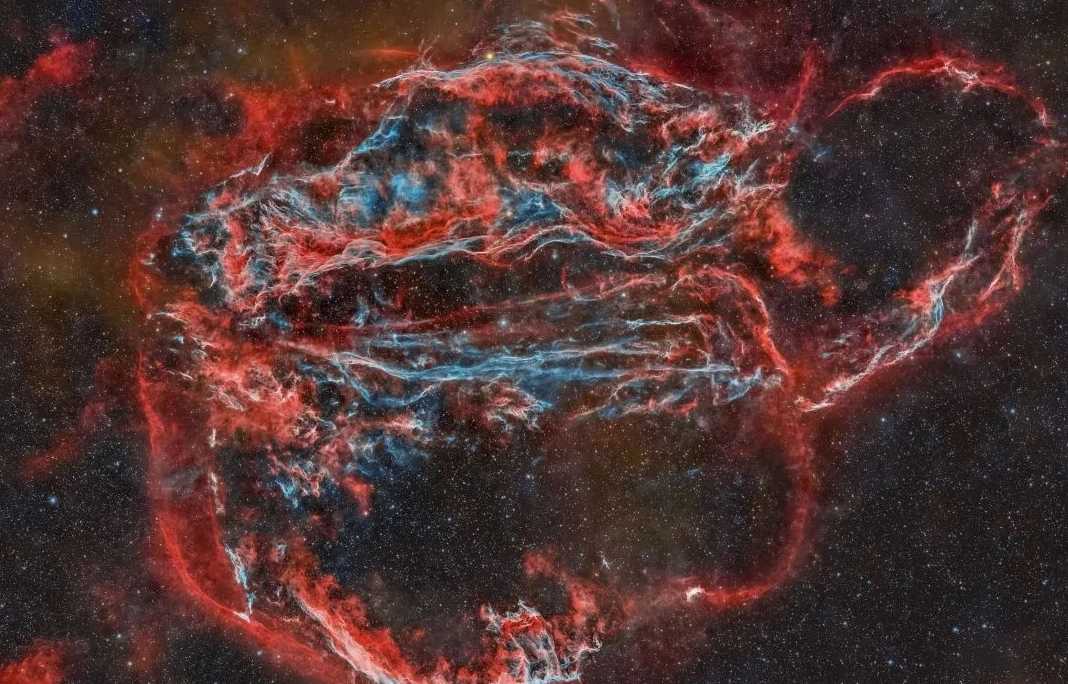
The Veil Nebula: Cosmic Relic of a Supernova That Lit the Ancient Sky
These ethereal wisps are the last observable remains of a star that perished in a supernova explosion ~7,000 years ago, giving birth to the Veil Nebula. When the star detonated, its expanding gas cloud shone as brightly as a crescent Moon, lingering in Earth’s sky for weeks during humanity’s prehistoric era. Today, this supernova remnant—known as the Cygnus Loop—has faded, visible only through small telescopes pointed at the constellation Cygnus.
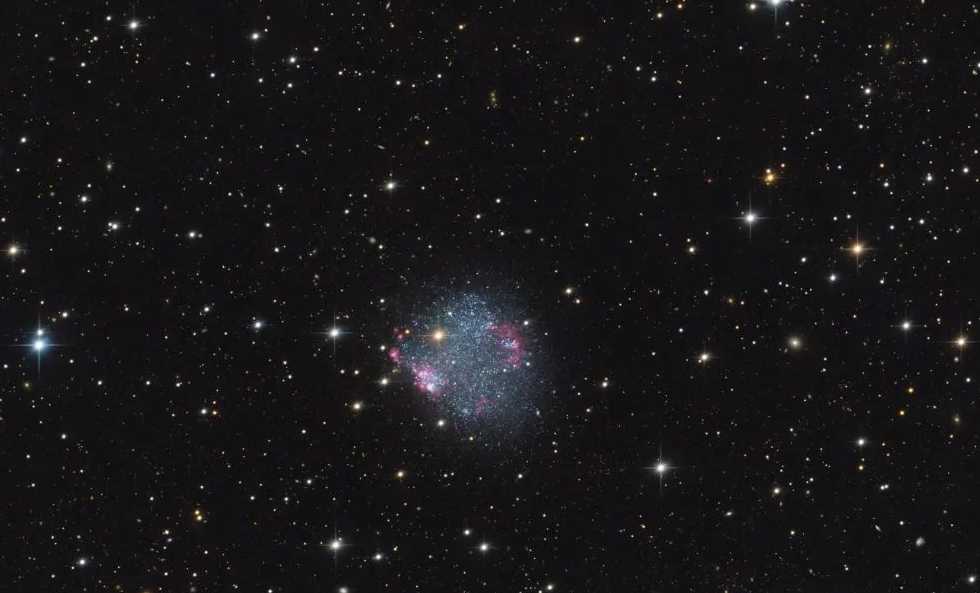
Sextans A: The Cosmic Underdog Where Stars Bloom in Ambery Clusters
While grand spiral galaxies steal the limelight with symmetric arms and glowing star nurseries, the irregular dwarf galaxy Sextans A weaves its own stellar saga in the cosmic periphery. Just 5,000 light-years across, this galaxy hosts young star clusters and star-forming regions like amber-like clumps suspended in space, blooming 4.5 million light-years away in the constellation Sextans. As a sentinel on the Local Group’s fringe, it stands distant from the galactic family including the Andromeda Galaxy and the Milky Way.

The Milky Way’s Most Beautiful Portrait: A 17-Hour Exposé of Cosmic Splendor
Stargazers and astrophotographers alike hail this deep-sky masterpiece as the Milky Way’s most stunning portrait. The image anchors viewers with a diagonally streaming galactic band in the lower-left, intersecting the vibrant Rho Ophiuchi Nebula at its center. Above, the dazzling red nebula of Zeta Ophiuchi floats like a cosmic flame, creating a triad of celestial wonders.